Active volcano monitoring technician
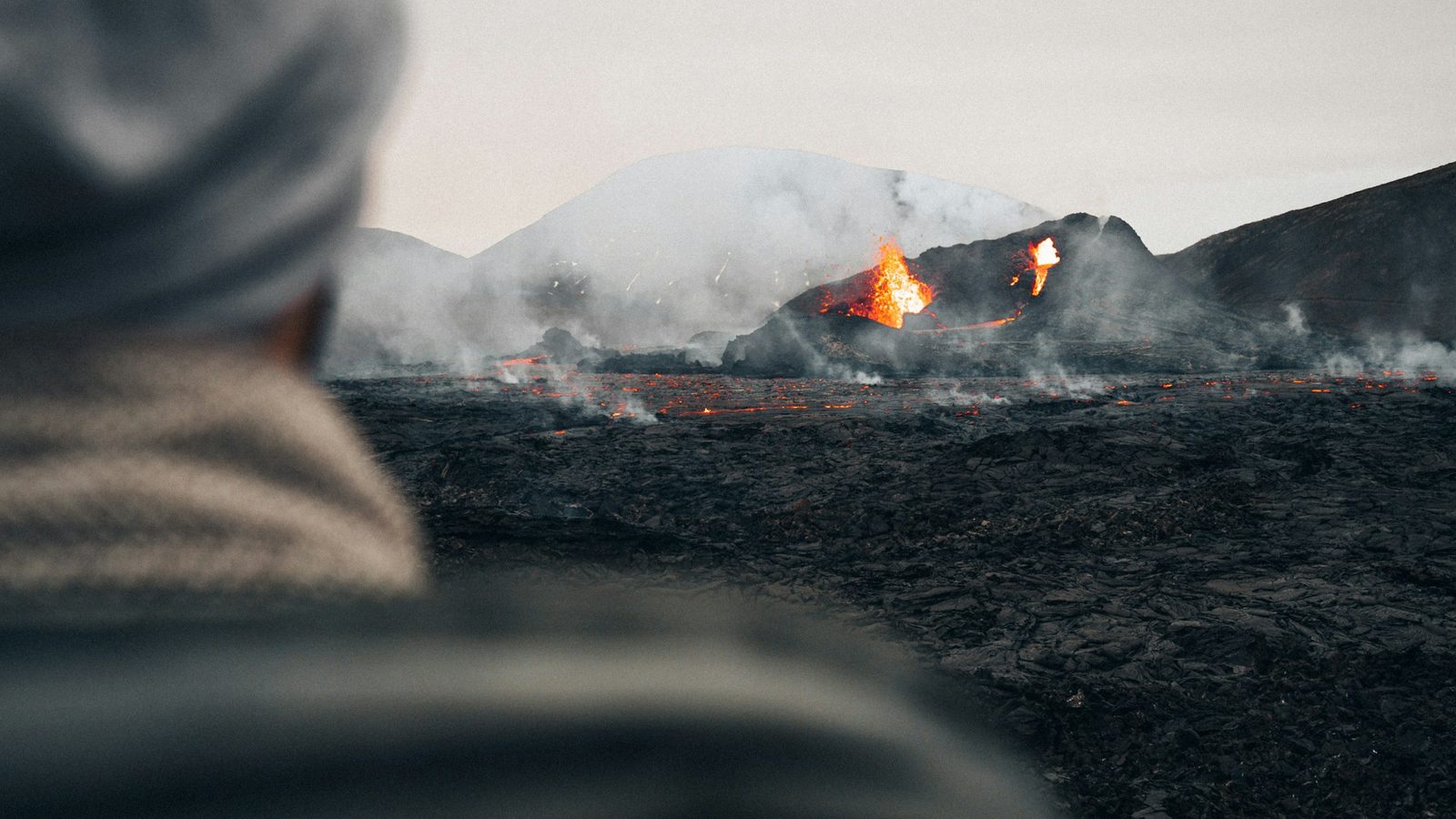
Active volcano monitoring technician

Iceland sits astride the Mid-Atlantic Ridge: 32 active volcanic systems, and since 2021 the Reykjanes peninsula has "woken up" again after 800 years of silence. Someone has to monitor this in real time – and that's exactly what the technical staff of the Icelandic Meteorological Office (IMO) do.


What the specialist does
Installs and maintains seismic stations, GPS receivers, gas sensors and lava observation cameras; flies by helicopter to fresh fissures, runs cables across lava fields. The data goes to IMO's duty shift 24/7.
Starting salary
At the start, 3200–3500 € net per month, formally a bit below the Icelandic average (~4000 € net ). In central Reykjavík with a studio rental it's tight; in the suburbs or Hafnarfjörður – comfortable living with a margin.
Salary after 3–5 years
4000–4800 € net. Growth comes through specialisation: taking responsibility for a specific instrument network (seismic, GNSS, gases), joining field projects with the university.
How to train
The standard route is a bachelor's degree (3–4 years) in geophysics, electronics or instrumentation in your home country, then a Geophysics master's at the University of Iceland (2 years, 120 ECTS , in English or Icelandic). The registration fee for foreigners is about 530 € per year, tuition is free . Alternative: a solid electronics/IT background and on-the-job training locally.
Language and special skills
At IMO the working language is English, B2 is enough. Icelandic B1 is needed for fieldwork and everyday life. Skills – soldering, handling field electronics, willingness to clamber over hardened lava and fly in poor visibility.
Demand
Since late 2023 there have already been 8 consecutive eruptions around Grindavík, and IMO has expanded its field teams. Technical specialist positions appear regularly on en.vedur.is/about-imo/vacancies .
Visa and route for foreigners
For third-country nationals – Residence Permit for Skilled Workers (the "expert knowledge" track) . The employer has to show it couldn't find a candidate in Iceland or the EEA. Processing takes 2–3 months.

The big myth: "this is a job for volcanologists with a PhD from Cambridge". In reality, half the work is electronics and logistics: replacing a battery at a station in the mountains, running fibre, reconfiguring telemetry. Scientists write the models, but it's technicians who go out and get them the data. No PhD required – what's required is hands, a head, and being at home in the cold.

The concrete detail that changes everything: since 2021 Reykjanes has been going through a sequence of eruptions after 800 years of quiet, and IMO today maintains a network of ~70 seismic stations across the country. The duty shift watches magma under Grindavík in real time – and the decision to evacuate the town depends on how fast a technician can reach a faulty sensor.

Standard route for a foreigner:

  • bachelor's degree in electronics or geophysics in your home country (3–4 years)
  • English up to B2, basic Icelandic
  • internship through European projects (EPOS, FUTUREVOLC) or directly via IMO vacancies
  • offer + Residence Permit for Skilled Workers
  • relocation

The honest downside: the weather. Nine months a year – wind, wet snow, and four hours of daylight in winter. A field call-out doesn't wait for a clear day: you'll be tightening terminals on a sensor at -10 °C with horizontal rain. But then you're standing in goggles at the edge of a fresh fissure, lava flowing through the viewfinder, and the duty officer says in your earpiece: "telemetry is back online".

Liked the post? Follow on Telegram →