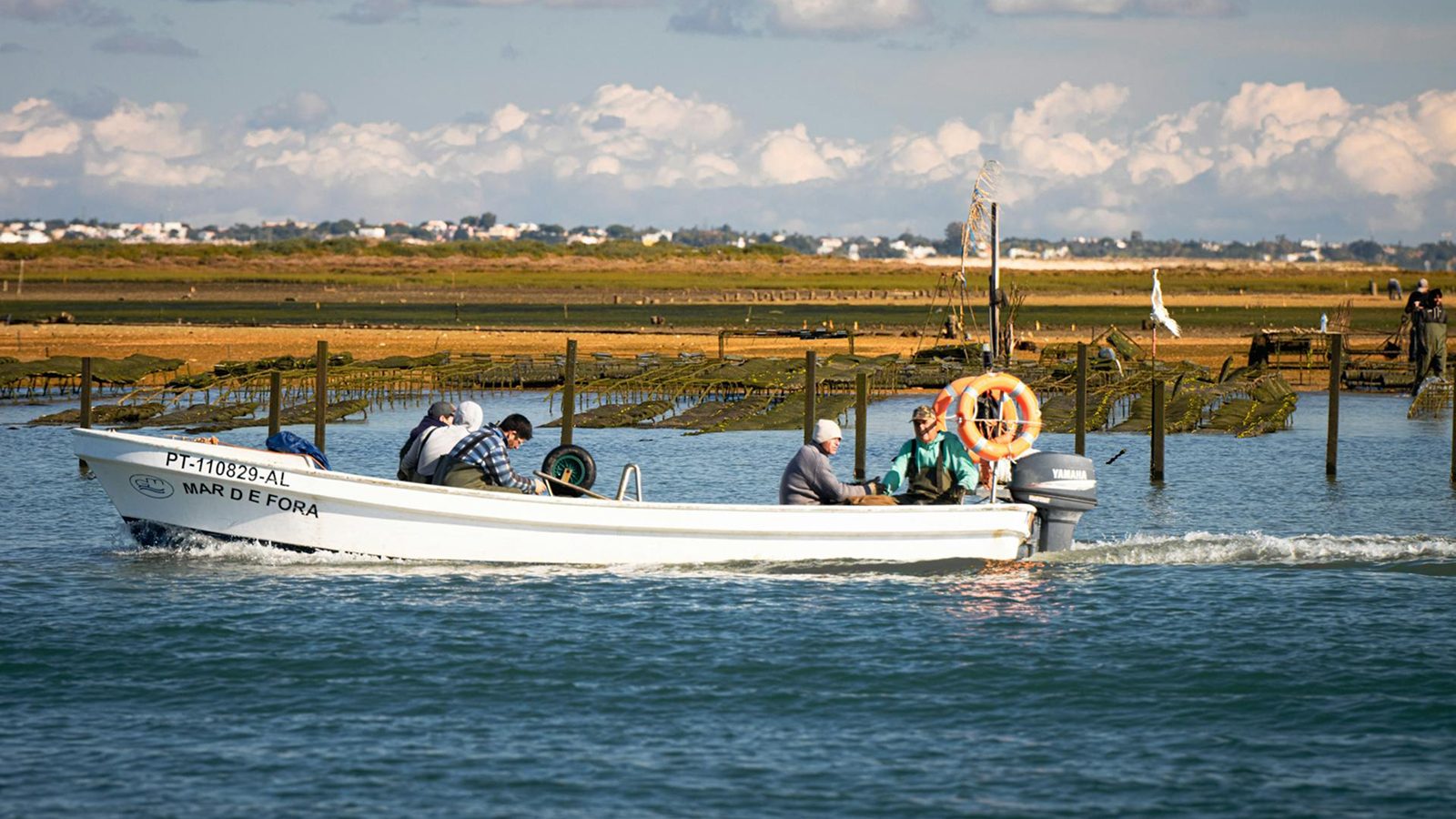
Ireland is Europe's third-largest oyster producer: about 130 farms, ~10,000 tonnes a year. The cold Atlantic and five-metre tides give you that signature "merroir" – the mineral tang that makes Galway and Carlingford oysters a favourite of Paris restaurants.
What the specialist actually does
Grows oysters in mesh bags on tidal trestles: flips them every 2–3 weeks so the shell grows dense. Sorts by size, scrapes off algae, preps them for sale. Winter is gear repair and laying in spat.
Starting salary
Farm assistant – 1800–2200 € net per month , a bit below the average wage in western Ireland. But Carlingford and the coast are far cheaper than Dublin: a room is 400–550 €, food 400 €, and you live comfortably with savings. In Dublin the same salary would already be a stretch.
Salary after 3–5 years
Senior aquaculturist or site manager – 2800–3500 € net. With your own foreshore licence you can push 4500 € in season, plus profit from direct sales to restaurants.
How to train
BIM (Bord Iascaigh Mhara) runs Aquaculture Skills and Husbandry courses at the Castletownbere (Cork) and Greencastle (Donegal) campuses – 6–12 weeks, free for EU residents. Manual Handling and Aquaculture Operator certificates are mandatory baseline. The work placement is straight onto active farms.
Language and special skills
English B1 is enough – commands are short, paperwork is simple. What you need: physical stamina (8–10 hours waist-deep in water), cold tolerance, no seasickness. Irish (Gaeilge) is not required.
Demand
Aquaculture is on Ireland's Critical Skills List – chronic labour shortage . 130+ farms post openings via AquaSearch and BIM.
Visa and route for foreigners
General Employment Permit (GEP) sponsored by the employer, ~8–12 weeks to process. After 2 years on the job – switch to Stamp 4 (no employer tie), after 5 years – PR.
The big myth: "oysters are snob food and a seaside farm is romance." In reality the farm is wet boots, wind-burned hands and a 4 a.m. low tide. The upside: the product going from your bag straight to Le Bernardin or Sketch.
Ireland is the only place where Native oysters (Ostrea edulis) still survive in commercial volumes. They take 4 years to grow instead of 2 (like Pacifics) and sell for three times the price. At high tide the trestles are submerged; at low tide you walk 500 metres out from shore.
Standard route for a foreigner:
→English up to B1 (3–6 months)
→online Aquaculture Foundations course (Cork College of Commerce, ~150 €)
→find a farm on AquaSearch.ie for a trainee slot
→employer files the GEP with a contract from 30000 € a year
→relocate to the Atlantic coast
The honest downside: the work is seasonal and weather-bound. An Atlantic storm isn't a "bad mood" – it's a week with no water access and a full reshuffle of the delivery schedule. The body gives out before the mind does: at thirty-five you already know you have shoulders. But the mornings – the horizon, the smell of iodine, oysters for breakfast that cost as much as a dinner back in Moscow.