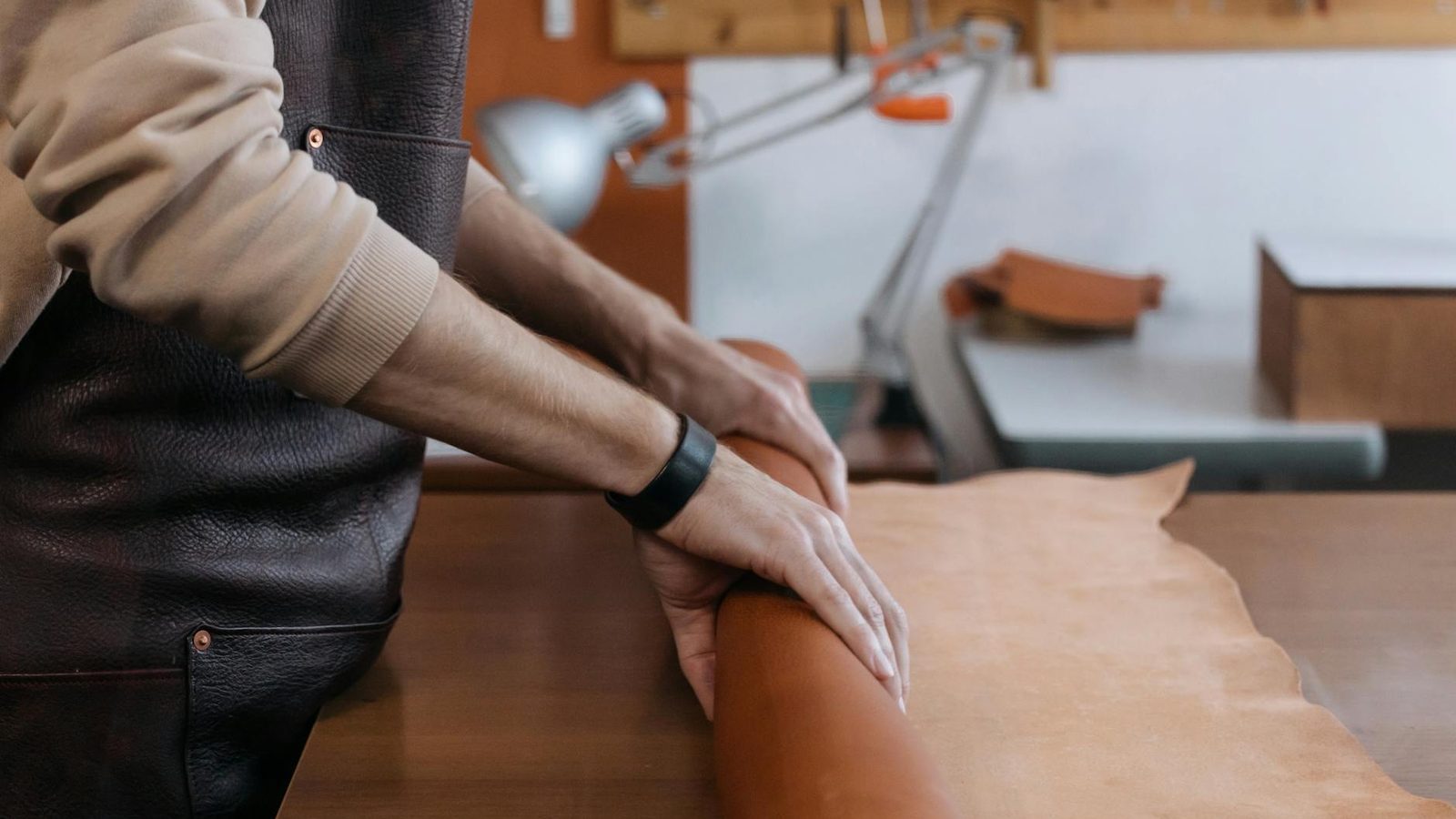
Millau is a small town in southern France that has spent a century and a half making the world's best leather gloves for CHANEL, Hermès and Dior. You can now learn the craft from scratch right there: France's first CAP "Maroquinerie option ganterie" (vocational diploma in leather goods with a glovemaking specialisation) opened in autumn 2025.
What the specialist does
Cuts thin lambskin to pattern, stitches the glove by hand or on a specialised leather sewing machine, and works until every finger fits like a second skin. One master produces 4–6 pairs a day.
Starting salary
Around 1500–1700 € net per month at the entry level . At the big houses (Causse Gantier – CHANEL's subsidiary, Maison Fabre – a long-standing Hermès supplier) the start is ~1700 € net. A touch below the median wage for the Aveyron département, but rent in Millau runs 330–600 €, so the money goes a long way.
Salary after 3–5 years
2000–2500 € net. An experienced master with a name at a luxury house – from 3500 € net. Growth comes from speed, clean stitching and working with rare types of leather.
How to train
The "CAP Maroquinerie option ganterie" programme at Lycée Jeanne d'Arc in Millau – two years in alternance format (study + paid apprenticeship at a manufacture), with students paid a percentage of the minimum wage. The alternative is the École Hermès des savoir-faire: 6 months of immersion plus 12 months of alternance, free and with a salary .
Language and specific skills
French from B1 – masters speak only French, and the technical vocabulary of leatherwork is highly specific. You'll need good fine motor skills and patience for monotonous, precise work. No prior experience required – that's exactly why the CAP was created.
Demand
Fewer than 20 active glove manufactures remain in all of France, about ten of them in Millau. The Millau glovemaking craft was added to France's national inventory of intangible cultural heritage in 2023, and a UNESCO application is being prepared. Demand for young masters outstrips what the school can graduate.
Visa and route for foreigners
Third-country nationals first obtain a student VLS-TS visa (long-stay residence permit for studies) for the CAP programme via Campus France . After graduation, the employer arranges the "Salarié" status – realistic, because the manufactures are short of masters.
The big myth: "nobody wears gloves anymore, the market's dead". In reality this is a premium segment that's growing: a hand-stitched lambskin glove sells in a boutique for 300–600 €, and every pair of CHANEL or Dior gloves you see on the runway was cut by hand in Millau or Saint-Junien. A 10-person workshop turns over several million euros a year.
Why Millau specifically? Since the 19th century the town has sat at the top of the leather pyramid thanks to local lamb breeds from the limestone Causses plateau – their skin is thinner, softer and more elastic than any other. This "terroir" – the unique combination of breed and pasture – can't be replicated in any other region.
Standard route for a foreigner:
→learn French to B1 (6–12 months)
→apply via Campus France for the CAP at Lycée Jeanne d'Arc
→get a VLS-TS student visa for alternance
→during the 2 years of study, land a contract at Causse / Maison Fabre / a smaller atelier
→after the diploma, switch to "Salarié" status
The honest downside: the work is sedentary and monotonous – 8 hours at a table with the same pair of gloves, and your shoulders and back will ache the first year. But by the end of that year you'll stop noticing time, and your hands will start doing things a factory machine will never reproduce.