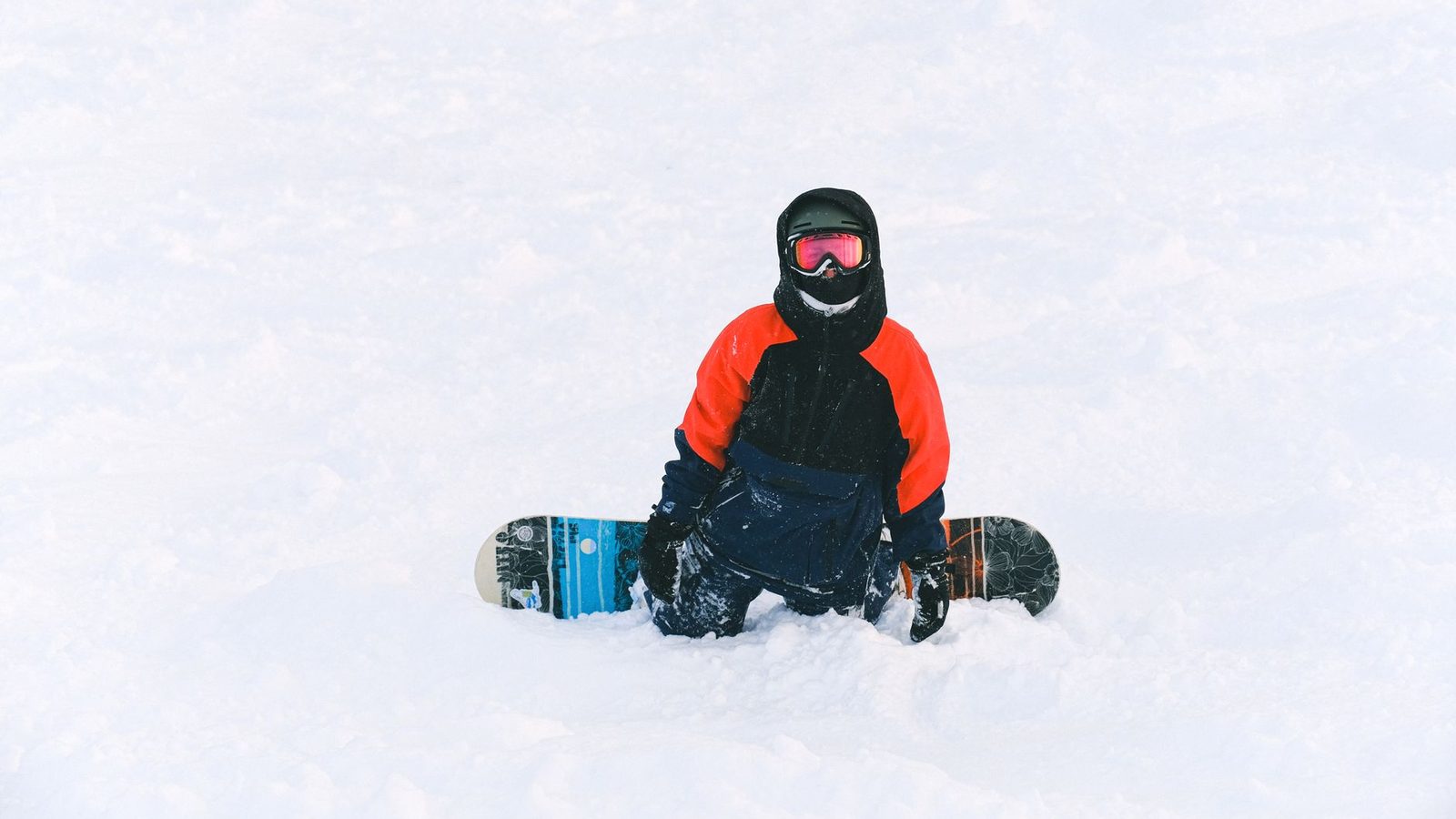
Hokkaido – a place where 14 metres of powder-dry snow falls over a single winter. The Japanese resorts of Niseko, Furano, Rusutsu and Kiroro turn into international hubs in winter, and they are chronically short of foreign instructors.
What the specialist does
Teaches tourists to ride deep snow – from a beginner's first stance to freeriding between birch trees. Season runs December to March, 4–6 hours of lessons a day, one-on-one or in small groups.
Starting salary
1500–1800 € net per month at entry level , formally a bit below the regional average, but most postings include resort dorm housing, canteen meals and a season ski pass – the take-home package lands at market level. Many schools also cover the return flight. In Niseko and Furano you live fine on this: housing is sorted, what's left goes to food, izakaya and trips around the island.
Salary after 3–5 years
2300–2900 € net per season month for senior instructors with JSBA B-class or CASI Level 2. Private lessons for VIP clients – 80–120 €/hour on top of the school rate.
How to train
Certification: JSBA C-class (Japanese federation) or international CASI / BASI / NZSIA Level 1. Courses in Niseko and Hakuba run 2–4 weeks and cost 2500–4500 € , including the exam. After certification – an internship at a resort school.
Language and special skills
English B2 – the working language of the schools. Japanese A2 is a nice plus but not required: 60–80% of clients in Niseko are foreigners from Australia, Singapore and Hong Kong. Confident freeriding in deep snow is a must.
Demand
Hokkaido is the world capital of powder, and every season schools post hundreds of vacancies. Niseko United, Rusutsu, Kiroro and Furano hire 50–150 instructors per season, a large share of them foreigners.
Visa and route for foreigners
Working Holiday visa (1 year ) – for citizens of countries with a WHV agreement with Japan (EU, UK, Korea, Taiwan, Australia, Canada, New Zealand, etc.). For those without WHV access – the Skilled Labor Sports Instructor visa, which requires 36 months of documented instructor experience .
The big myth: "You can't get into Japan without Japanese." The reality is the opposite. In Hokkaido, schools specifically look for English-speaking instructors – their clients already speak English because they're flying in from Sydney, Singapore and Hong Kong. Japanese is for ordering ramen and chatting with your manager, nothing more.
Hokkaido pulls in its 14 metres of snow per season – nearly double the Alps and Colorado. Siberian wind crosses the Sea of Japan, picks up moisture and drops it on the island as dry powder. That's "japow", and it's what people fly across the world for.
Standard route for a foreigner:
→get to a confident freeride level (if not – do a season in the Alps for the base)
→take a CASI / BASI / NZSIA Level 1 course in Niseko or Hakuba (2–4 weeks)
→secure an offer from a resort school for the next season
→apply for a Working Holiday or Skilled Labor visa
→move in November, season starts in December
The honest downside: the work is seasonal – 4 winter months you're at peak, the other 8 you either need to go instruct in the southern hemisphere (New Zealand, Chile) or have a second income stream. The upside: you live between two winters and see snow year-round.