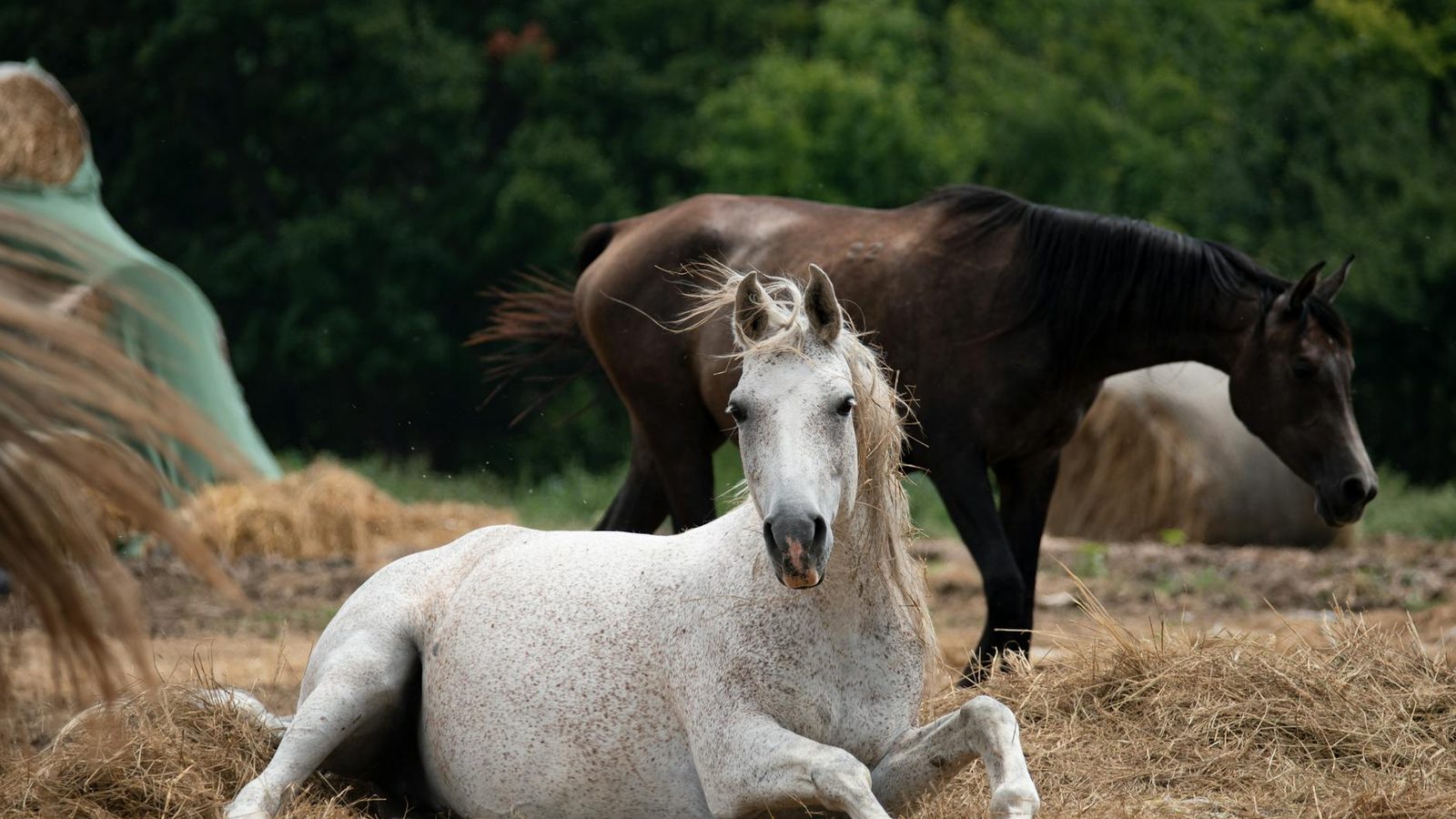
If you want to radically change careers and work with a rare horse breed, Slovenia runs the world's main Lipizzaner stud farm in the village of Lipica, founded back in 1580. Here they train both horses and riders by the principles of classical dressage – slowly, the old-fashioned way, without the show-business gloss.
What the specialist does
Works with young stallions aged 3–7: lays the foundation, brings them up to the complex elements of the "high school" (haute école – a series of stationary and airborne movements), prepares them for public performances and sale.
Starting salary
Entry-level pay is 1562–2076 € gross/month (≈1170–1500 € net – the exact figure depends on your tax category), which is a bit below the Slovenian average (~1640 € net). In Sežana and Lipica itself, renting a room runs 250–350 €, so the money is comfortable; in Ljubljana it would be tight.
Salary after 3–5 years
1700–2100 € net, with head-trainer assistants above 2500 €. You grow through public performances, private clinics and work with export-bound stallions.
How to train
The basic path is lessons at a KZS club and the Jahač 1 / Jahač 2 exams, then a competition licence. To work with young stallions you need solid practical experience, not just a certificate. Training a horse at Lipica by the canons of the classical Spanish school takes 4–5 years , sometimes more than 6. Private dressage lessons at Lipica start at 50 € per 45 min .
Language and special skills
Slovenian A2–B1 (easy to learn if you already know any Slavic language), English B1 for tourists and international clinics. At least three years of riding experience is mandatory, otherwise you won't be allowed near the stallions.
Demand
The stud keeps more than 300 horses and periodically posts vacancies for riders (Jahač II / Jahač III) and stable workers. Junior positions and entry-level stable work are possible. There are only a handful of classical dressage centres in Europe, and they exchange specialists among themselves.
Visa and route for foreigners
For third-country nationals – the Single Permit for work and residence, issued for the duration of the contract but no more than 2 years, with processing taking 1–2 months .
The big myth: "getting into Lipica is like breaking into the Bolshoi – you have to be born into a family of bereiters." In reality the stud is a state institution, it hires by open competition, and positions are open to foreigners too. There's one criterion: can you work a young horse without a heavy hand.
The breed itself is unique: Lipizzaners are born black or bay and only turn white by age 6–10 – so on the training ground you see a mix of dark adolescents and snow-white grown stallions. That picture made it onto the UNESCO list as living cultural heritage. Lipica is one of the key historical centres of classical dressage, alongside the schools in Vienna, Lisbon, Jerez and Saumur.
Standard route for a foreigner:
→regular riding at home and basic work with horses
→if possible – amateur starts or Jahač 1 / Jahač 2 certificates
→Slovenian to A2–B1
→a course or trial trip to Lipica / a KZS club
→apply for a rider, groom or junior position
→single permit tied to the contract
The honest downside: outdoor work year-round, in winter the karst gets hit by a strong bora – an icy wind off the mountains – and young stallions mean bruises and falls, especially the first two years. But the first time you piaffe your own horse under the winter sun, you stop thinking about all that.