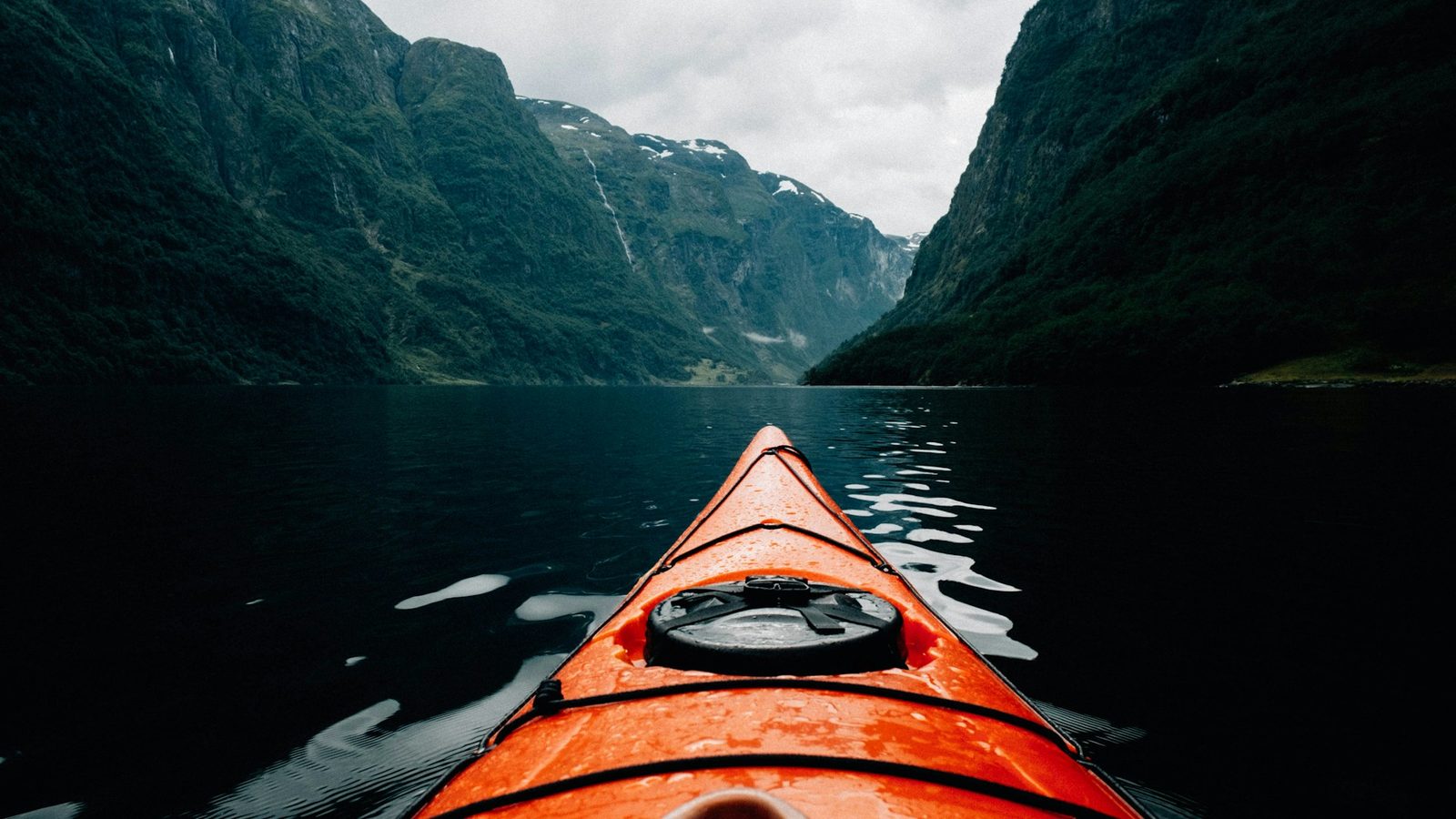
Turquoise sleeves of water cutting tens of kilometres deep into the cliffs – the Sognefjord and the Nærøyfjord, both on the UNESCO list. From April to September, tourists paddle these places by kayak, and someone has to lead them safely and read the weather.
What the specialist does
Leads groups along the sea arms of the fjords: briefing, monitoring weather, wind and currents, helping beginners on the water, camp on overnight trips, and rescuing a person from cold water if needed.
Starting salary
First season – around 17 €/hour gross + 12% holiday pay . At full load that comes out to ~3000 € gross/month. Below the Norwegian average, but normal for seasonal adventure tourism: some operators throw in food, shuttle and gear.
Salary after 3–5 years
Growth happens through the role: lead guide, multi-day tours, overtime, instructor certificates, winter work in adjacent outdoor fields. In good months an experienced guide clears more than 4000 € gross, but that's seasonal income, not an annual salary.
How to train
Base certificate – Grunnkurs Hav from Norges Padleforbund: ~16 hours, ~260 € . To work as a guide you need the Aktivitetsleder Hav level or an IPP3+ equivalent. All in, ~1000–1500 € on courses plus one or two practice seasons.
Language and special skills
English at B2/C1 is pretty much mandatory. Norwegian isn't always required, but for some operators a Scandinavian language is a hard requirement. You need physical fitness, a calm head and confident experience in cold water and wind.
Demand
Every spring, operators look for sea kayaking guides, assistant guides and trip leaders. Vacancies open early – January to March – and by April the team is already on site.
Visa and route for foreigners
For third-country nationals – usually a seasonal worker permit (up to 6 months out of 12). A Skilled Worker permit is possible if the position is set up as skilled. Check the visa against the specific vacancy.
The big myth: "they only hire Norwegians". In reality, the seasonal teams in Gudvangen, Flåm and Voss are often staffed by Spaniards, Poles, Lithuanians, Slovaks and Brits. What matters to the operator is that the guide is safe, certified, and runs the group confidently in English.
Norway's west coast is a country of water, cliffs and narrow passages. The Nærøyfjord squeezes down to ~250 metres at its narrowest point, and the cliffs rise almost 1700 metres straight out of the water. Paddling there is a perspective trick: you're a tiny dot in a boat inside a huge stone stage set.
Standard route for a foreigner: kayak courses at home and 1–2 seasons on the water → Grunnkurs Hav in Norway or equivalent → Aktivitetsleder Hav / IPP3+ → applying for vacancies in January–March → contract and work permit check → moving over by April–May.
The honest downside: the work is seasonal. From October to March there are almost no tourists – and no steady paycheck either. Many guides head off to ski guiding, outdoor work or other seasonal tourism for the winter. But in summer you're on the water 8 hours a day among some of the most dramatic landscapes on the planet – and you're getting paid for it.