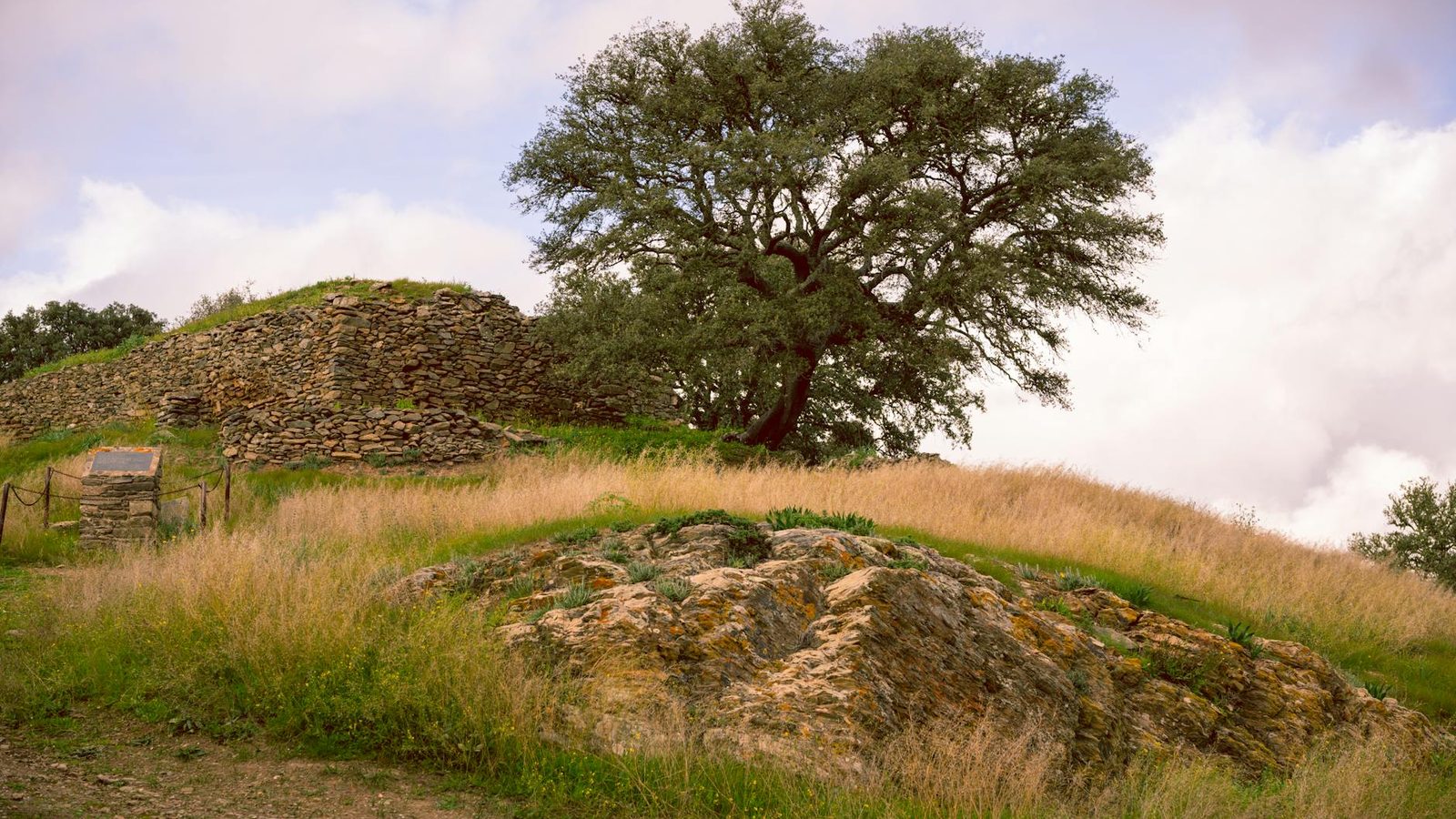
The dehesa is an ancient agro-silvo-pastoral system in southwestern Spain: sparse oak groves with Iberian pigs, sheep and cows grazing under their canopies. Without human involvement, this ecosystem gradually degrades, which is why Extremadura and Andalusia are constantly looking for specialists who can restore and properly manage it.
What the specialist does
Plans the thinning of oaks and the planting of young holm and cork oaks, coordinates the rotation of "pata negra" pig grazing, monitors tree health (the main enemy is the fungal disease "la seca") and helps farm owners apply for EU subsidies.
Starting salary
At entry level, typically 1489–2124 € gross/month . After tax, that's often around 1300–1700 € per month depending on the contract and taxes. For Extremadura, that's a normal level: renting an apartment in Cáceres or Badajoz costs 400–500 €, so living on this is quite realistic. In Madrid it would be noticeably tougher.
Salary after 3–5 years
2000–2600 € net/month, if you manage several farms as an independent consultant or work your way up to managing a large estate (finca).
How to study
People often come into the profession through agronomy, forestry, biology, GIS or agriculture. A useful plus is the "Especialista Universitario en Gestión Integral de la Dehesa" programme from the University of Extremadura: about 200 hours of training, mostly online plus field practice, costing around 950 € . You can enter the field without a relevant degree too, through farm practice, but for a stable career and working with subsidies, a diploma noticeably improves your chances.
Language and skills
Spanish B2 is a must – you'll be talking with farmers in villages where almost no one speaks English. QGIS skills, an understanding of PAC subsidy schemes and basic knowledge of pasture ecology are all useful.
Demand
The dehesa covers roughly 3.5 million hectares in Spain, and a significant portion suffers from "la seca" – mass oak die-off. Regional restoration programmes regularly look for technicians and specialists, especially in Extremadura and the province of Huelva.
Visa
For third-country nationals – "autorización de residencia temporal y trabajo por cuenta ajena". Formally, the decision on the employer's application can take up to 3 months, after which you usually get about another month to process the visa through the consulate.
The big myth: "the dehesa is just jamón and pigs." In reality, it's one of the most thoroughly studied agroforestry systems in Europe: livestock rotation, tree density, water regime and soil load are calculated almost like an engineering model. Without proper management, a farm can genuinely turn into a depleted pasture over time.
The dehesa itself is not a wild natural forest but a man-made landscape that has taken shape over centuries. That's exactly why it's often cited as an example of a cultural agro-landscape, where humans don't destroy nature but maintain the balance of the system through constant involvement.
Standard route for a foreigner:
→basic background in agronomy, forestry, biology, GIS or agriculture
→Spanish to B2
→"Gestión Integral de la Dehesa" course or a similar specialisation
→internship or work with a finca / consulting company
→if necessary – recognition of your diploma in Spain
→work contract and relocation
The honest downside: Extremadura is one of the most sparsely populated regions of Spain. In summer it easily hits +40 °C, there's a lot of dust and dry air around, and the nearest big city is sometimes an hour and a half away. But in the evening you sit under a two-hundred-year-old oak, watch the Iberian pigs eat acorns, and realise that your work is literally helping this landscape not to disappear.