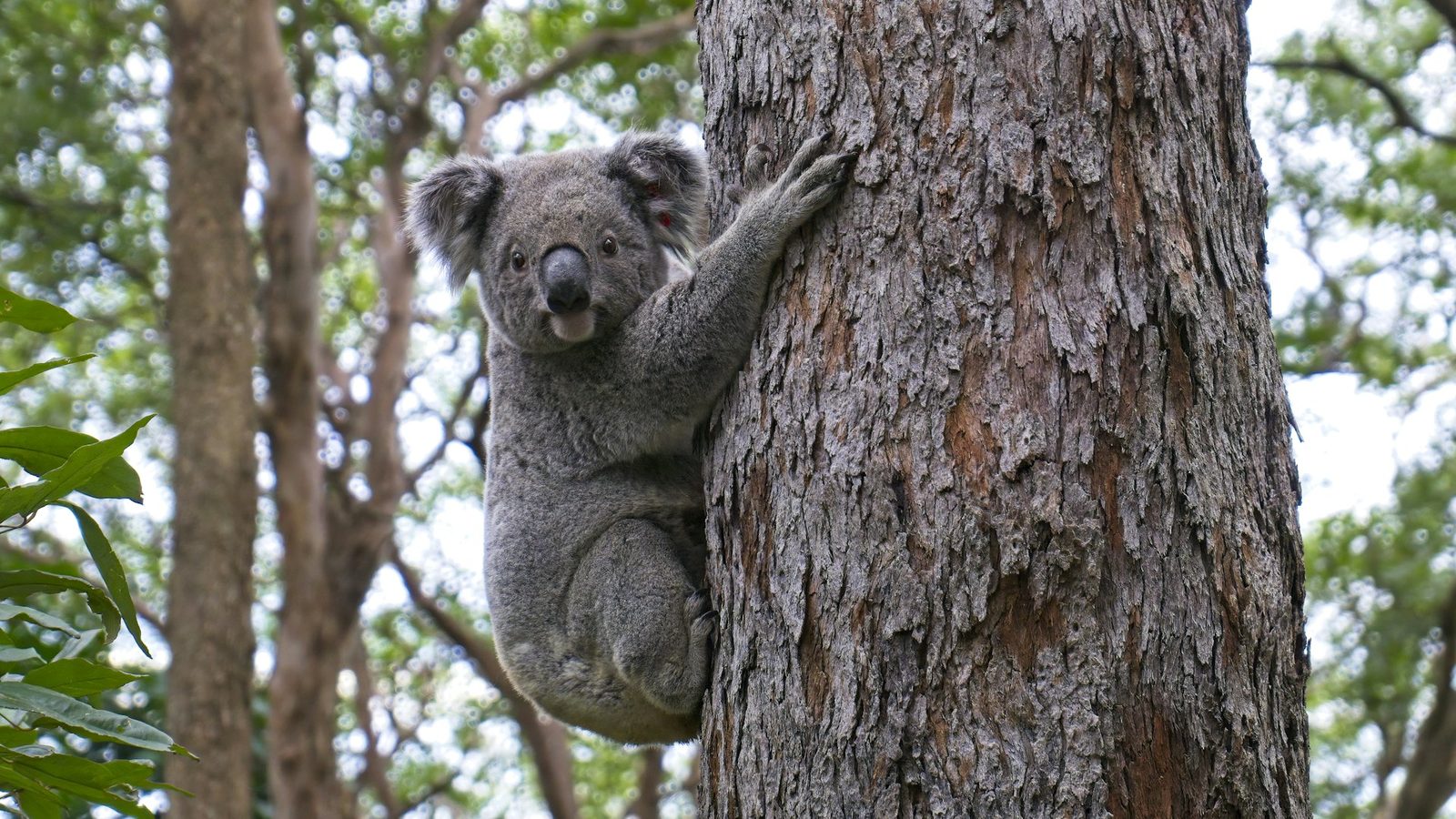
After the 2019–2020 fires, Australia stepped up koala protection: in 2022, populations in Queensland, New South Wales and the Australian Capital Territory were granted federal endangered status – officially recognised as threatened with extinction. A network of wildlife hospitals and rehabilitation enclosures has grown around this, but the system runs largely on volunteers, with paid roles sitting at the intersection of animal care, zoo keeping and veterinary support.
What the specialist does
Takes in injured and orphaned koalas, stabilises them, feeds joeys, treats burns, injuries and chlamydia, cleans enclosures, prepares eucalyptus branches. In the final stage, the animal is moved to a quiet enclosure where it retrains its "wild" behaviour before release – that's exactly how the Port Macquarie Koala Hospital describes this phase.
Starting salary
Around 2100–2500 € net per month in entry-level keeper and animal care assistant positions. Below the Australian full-time average, but in smaller towns it's a workable level with a careful budget. SEEK lists zookeeper salaries at ~37000–43000 € per year , PayScale around 34500 €.
Salary after 3–5 years
2700–3300 € net as a senior keeper, veterinary nurse assistant or coordinator at a major hospital or sanctuary. Income grows through experience, certification, a veterinary foundation and responsibility for other staff – not through a "trendy industry".
How to train
The basic route is Certificate III in Wildlife and Exhibited Animal Care at TAFE Queensland: about a year, on-campus or partially online, full cost around 8000 € . A diploma alone isn't enough: almost everyone starts by volunteering with WIRES, a rescue group, a vet clinic or a sanctuary.
Language and skills
English B2: vet instructions, records, communicating with the team and visitors. Any animal experience helps – farm, shelter, vet clinic, stable. You'll need strong hands, a calm head and a psyche that can handle injuries, infections and euthanasia.
Demand
A live but small niche: koala hospitals in Port Macquarie, Currumbin and Australia Zoo. Vacancies appear regularly, but competition is high – the work is emotionally appealing, and paid positions almost always require volunteer hours already logged.
Visa
The realistic route is Student 500 at TAFE, then Temporary Graduate (subclass 485) for 2–3 years. In parallel – sponsorship under the Skills in Demand visa (subclass 482), salary threshold 46400 € per year (CSIT from 1 July 2025).
The big myth: "koala care is a full-blown industry with dozens of vacancies". In reality, the system runs on volunteers, and paid roles mean keeper and animal care worker positions at wildlife hospitals.
Australia is the only place where koalas live in the wild, and on the east coast the population has dropped by roughly 50% over twenty years. Every rehabilitated animal is literally statistically significant.
Standard route for a foreigner:
→English B2 and a year of volunteering at home
→Student 500 at TAFE NSW or Queensland
→Certificate III plus hours at WIRES
→Temporary Graduate 485
→after 1–2 years, 482 sponsorship or a regional PR program.
The honest downside: the work is physically and emotionally draining – night feedings every 3 hours, burned paws, not all patients survive. But on the day you release a rehabilitated koala back into the eucalyptus with a GPS tag, it all pays off.