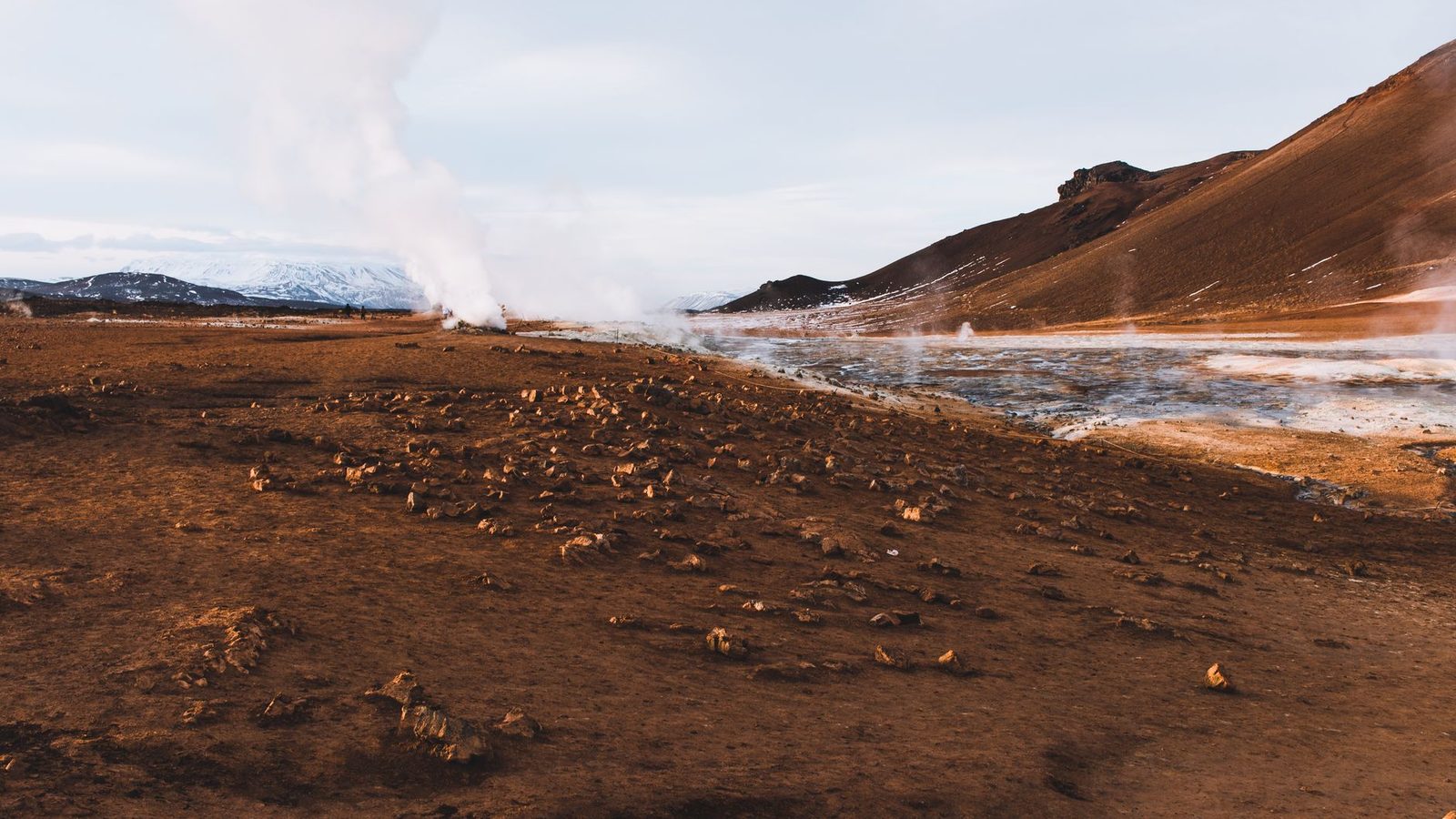
Iceland heats its homes and brews its hot water straight out of the ground – and that takes people who know how to drill through volcanic rock. The job of a geothermal drilling technician here is engineering at the edge of geology, with something literally boiling under your feet.
What the specialist does
Drills wells in geothermally active zones: monitors pressure, temperature, and the drilling equipment. Manages the process at every stage – from site preparation to bringing the well into operation.
Starting salary
3100 € net per month . In Reykjavík a one-bedroom rental runs 1360–1900 € – but most technicians work rotational shifts where housing and meals are covered by the employer, so the starting salary lands almost entirely in your pocket.
Salary after 3–5 years
4200–5500 € net per month as a senior technician or drilling foreman.
How to train
The main route is direct hire through Jarðboranir with on-the-job training. The mandatory IADC Well Control certification takes 5 days. In parallel, there's the GRÓ Geothermal Training Programme – Drilling Technology specialization: 6 months, 0 € , aimed at specialists from developing countries with a technical background.
Language and special skills
English B1+ is the working language on the rigs. Icelandic isn't required at the start. A technical background or experience in a related field is mandatory.
Demand
Iceland is expanding its geothermal capacity, and vacancies at Jarðboranir are open continuously. The company operates across several continents – Europe, Asia, Oceania, the Caribbean – so there's the prospect of international assignments.
Visa and route for foreigners
Residence permit based on work – Labour shortage / Expert knowledge (Directorate of Immigration Iceland) , with the legal decision taking up to 2 months. The Expert knowledge category requires a university degree or a recognized technical qualification. An important nuance for anyone who needs a visa to Iceland: under the Labour shortage category you cannot be in the country when applying or while the application is being processed – otherwise it's a rejection; under Expert knowledge, presence is allowed as long as your stay is legal. For non-EU citizens, the route is realistic if you have an offer from an employer.
The big myth: "It's just like an oil rig in the desert – dirty, boring, and dangerous." In reality, geothermal drilling in Iceland is work with living geology: the wells go straight into zones of magmatic activity, the pressure and temperature are extreme, and the equipment is specialized. In 2009 the IDDP project accidentally hit a magma chamber at a depth of 2.1 km – the first direct contact with molten rock in the history of drilling. This isn't the oil patch, it's volcanology with an engineering slant.
Iceland gets about 90% of its heat and about 30% of its electricity from geothermal sources – the largest share in the world. And Jarðboranir exports its technology to the Philippines, New Zealand, the Azores, and the Caribbean (Dominica, Nevis): at some point the Icelandic technician is literally teaching the world how to heat itself from the ground.
Standard route for a foreigner:
→Confirm your technical background – engineering, mechanics, drilling, related fields
→Get IADC Well Control certified (5 days, available in various countries)
→Apply directly to Jarðboranir – vacancies are open continuously
→Get an offer and apply for the work-based residence permit (up to 2 months for processing)
→Arrive, go through the induction briefing, and start your first rotation
The honest downside: A 14/14 or 21/7 rotation is reality, not an abstraction: weeks on the rig, far from the city, in whatever weather Iceland throws at you. Physically hard, zero creativity, no urban comfort. But people come here for something else – to work with what most people only see in volcano documentaries.