Offshore Aquaculture Farm Technician
Offshore Aquaculture Farm Technician

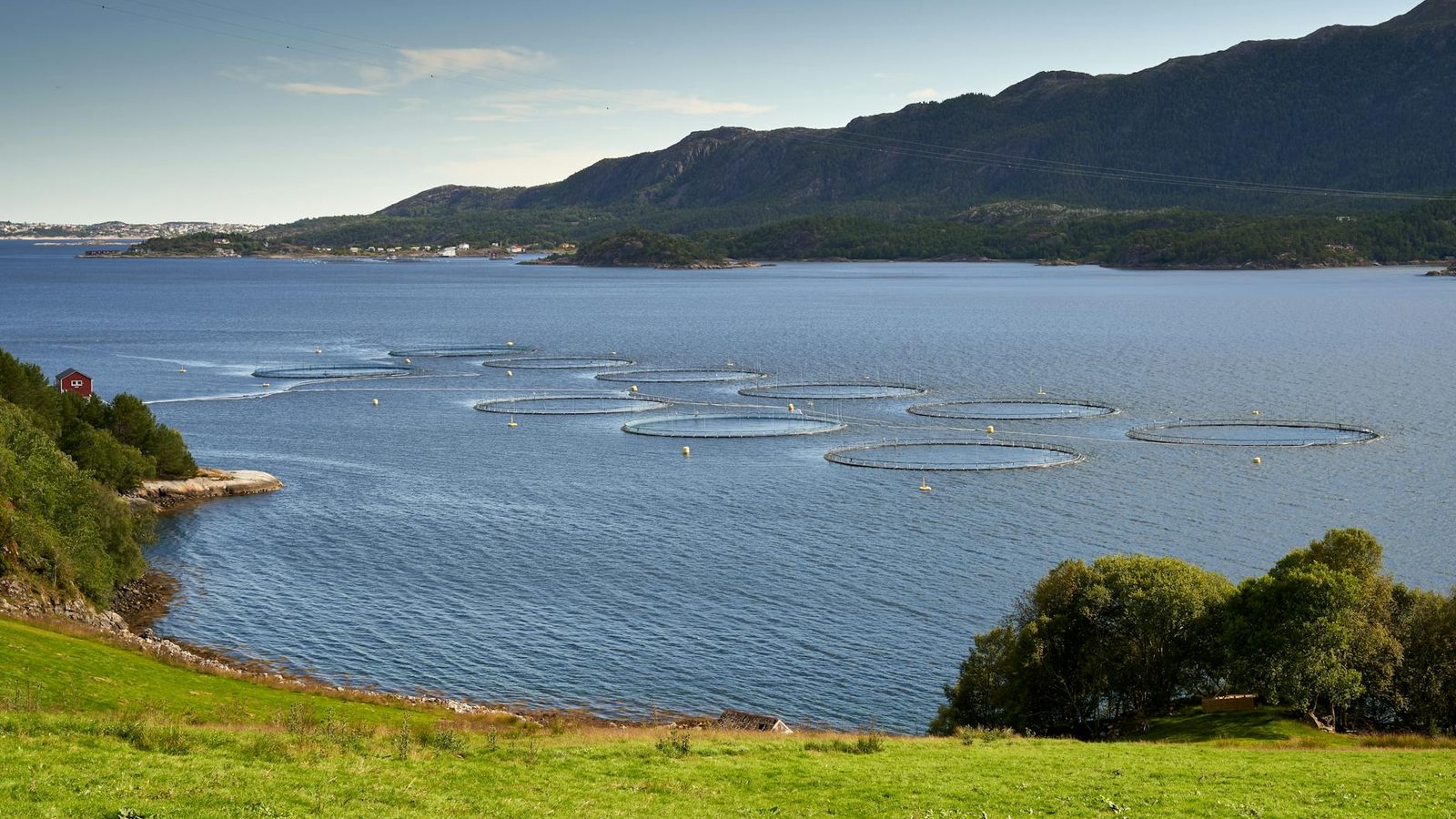
Norway feeds salmon to the entire world – and it does so not from the shore, but right inside the fjords, on floating platforms each the size of a football field. The offshore aquaculture technician is the person without whom these structures wouldn't run for a single day.


What the specialist does
Operates automated feeding systems, deploys ROV drones (remotely operated underwater vehicles) to monitor the pens, and tracks water-quality sensors. All of this – on a floating farm in the open sea.
Starting salary
Around 2450 € net per month – slightly below the Norwegian average, but most rotation positions include free on-board accommodation, and expenses drop sharply. The figure reflects the lower bound of the management category in aquaculture, after Norwegian tax (~28%).
Salary after 3–5 years
2800–3300 € net per month. The path there is a senior operator or shift supervisor role: the industry average is already close to this range.
How to train
The basic STCW-F safety course (for fishing and aquaculture vessels) takes a few days and is enough for a first contract. The full theoretical course – Akvakulturfaget (a blended-distance format from Akademiet Videreutdanning), about a year of evening study; ~900 € for union members. Norwegian from B1 is required, with a written exam at the end (registration windows 15.01–01.02 and 01–15.09).
Language and special skills
Norwegian A2–B1 is desirable; international companies accept English B1. STCW-F and a valid maritime medical certificate are mandatory.
Demand
Norway is the world's largest producer of Atlantic salmon, and the industry is actively moving offshore. Industry analysts (EY and others) note a growing shortage of qualified personnel in Norwegian aquaculture.
Visa and route for foreigners
Oppholdstillatelse for faglærte (Skilled Worker Residence Permit) – UDI ; processing time varies, ballpark a few months. You need a concrete offer from a Norwegian employer, vocational training of 3+ years (or a university degree, or 6+ years of relevant experience), employment at no less than 80%, and a salary in line with Norwegian industry standards. Norway is not in the EU but is part of the EEA and Schengen: EU/EEA citizens don't need a permit, while third-country nationals specifically need the Skilled Worker Permit.

The big myth: "It's dirty work in rubber boots – gutting fish, hauling nets." In reality, an offshore technician looks more like the operator of a smart factory: the feeding interface, telemetry from underwater cameras, analysis of sensor data. The ROV drone for inspecting the nets is launched from a tablet, not with a gaff in hand.

Norway produces about half of the world's Atlantic salmon (≈45–50%), and most farms sit right inside the fjords – the scenery outside the porthole matches. Typical rotation patterns are two weeks on board alternating with two-to-four weeks at home: the rhythm gives long blocks of free time between shifts. In parallel, the country is developing next-generation submerged and open-ocean farms: this is literally a new frontier, where engineers and biologists from dozens of countries are already working.

Standard route for a foreigner:

  • Take the STCW-F maritime safety course (a few days, available in many countries) and arrange a maritime medical certificate
  • In parallel, start the Akvakulturfaget course online or push your Norwegian up to B1
  • Apply for rotation positions at international aquaculture companies that accept English B1
  • Get an offer and submit for the Skilled Worker Residence Permit (UDI) – processing usually takes a few months
  • First rotation – with on-board accommodation, minimal expenses at the start

The honest downside: Two weeks in the open sea in winter off Norway's west coast is no resort: wind, darkness and rough swell. The rotation rhythm isn't for everyone, especially if you have a family or dislike isolation. But that contrast is exactly why people go – the free weeks at home after a shift feel completely different.

Liked the post? Follow on Telegram →